Tuesday, 18 August 2015

Reading Roundup: What’s New in Blogging Lately


Reading Roundup: What's new in blogging this week / ProBlogger.net
Greetings from sunny Queensland, where we are hosting the sixth annual ProBlogger Training Event! We kicked off the two days of learning and connecting with our fellow bloggers with some inspiring words from Darren himself, despite a few sore heads in the crowd after a solid night at the Welcome Networking Event last night!. Tonight is our poolside party, which promises to be even bigger. The theme is “shine” and I hear Darren’s got something extremely eye-catching up his sleeve to wear – make sure you’re following the #PBEVENT hashtag on social media to see for yourself!
Read on for this week’s round up of what’s making news in blogging.

Why Slack is Exploding as a Community-Building Platform // Hootsuite

We are using Slack at PBEVENT for all our team communication and while it’s taking some of us a while to get our heads round it, it’s proving to be a popular choice for community-building in general. Read why Hootsuite think it’s an “email killer”.

Is Google Experimenting with Bringing Twitter Into Desktop Search Results? // Search Engine Land

It might be time to dust off that old Twitter account. When was the last time you actively used it? Could be worth reviving…

Want More Blog Traffic? Focus on Growing Subscribers // Hubspot

The email list. The one everyone tells you to have because it’s so important for reaching your readers no matter what social network they’re on. It’s still the biggest tip. Hubspot tells you how to make it a priority.

Periscope Now has 10 Million Accounts – Time for Your Brand to Start Live-Streaming? // Social Media Today

Live Streaming is still the buzzword of the moment. This article explains why you should be jumping on that trend.

How to Optimize Your Facebook Posts with Facebook Audience Insights // Social Media Examiner

We’ve said it all along – the key to Facebook success is knowing your particular audience. Delve into the insights to help you figure out a content strategy that works.

So what’s news with you? What article or tip have you found useful lately?
Stacey is the Managing Editor of ProBlogger.net: a writer, blogger, and full-time word nerd balancing it all with being a stay-at-home mum. She writes about all this and more at Veggie Mama. Chat with her on Twitter @veggie_mama or be entertained on Facebook.

ProBlogger Podcast: Turn Blog Surfers into Loyal Readers by Building a Sticky Blog

How to get blog readers to keep coming back for more: ProBlogger.net
When someone lands on your blog for the first time, you want them to stay as long as possible.
In he last two ProBlogger Podcast episodes, I’ve shared some tactics for finding readers by first asking yourselves some really important questions, and by discussing two types of content that you need. In today’s episode, I talk about how you keep those readers there by building a sticky blog. What I mean by that is having your blog set up so there is something that motivates readers to explore it further, making the decision to return and keep connected in some way, which I think is a fundamental component of any successful blog.
I always say it’s much better to find a new reader and hook them into becoming a regular than it is to have to find fresh readers every day. This is really how readership grows over time.
In the podcast, I discuss the ways you can make your blog completely irresistible to first-time viewers. From first impressions to subscription options, I go through all the things I believe a blog needs in order to be sticky. How can you build anticipation? What kind of content works for recurrent traffic? How can you drive interaction from your audience? What are their incentives to stick around?
Click here to listen to the episode 35 of the ProBlogger Podcast and view the show notes, and as always, I’d love to get your feedback on this episode.

3 Growth Hacking Strategies for Bloggers to Quadruple Their Blog Traffic without SEO

This is a guest contribution from Anil Agarwal.
Who else wants more blog traffic?
Hands down, everyone wants it.
Unfortunately getting traffic to a blog is not easy. Every single visitor counts.
One of the hardest things for most bloggers is boosting their blog traffic. If you have a fairly new blog, it’s definitely a daunting task.
The #1 reason most bloggers quit is because they don’t see any growth in their traffic.
If you’re one among them, this article is for you! We’ll discuss a few growth-hacking tips to grow your blog traffic without actually doing any SEO. Are you ready?
What is growth hacking all about?
Growth hacking is the trending keyword phrase these days. It was first introduced by startup marketer Sean Ellis to redefine the startup marketing role.
Growth hacking is a method of achieving incredible growth by using non-traditional strategies.
In simple terms, growth hacking means driving measurable results by focusing on what WORKS! It is similar to 80-20 rule, identifying the 20% of your activities that will result in 80% of the gain. When you apply growth hacking, you’ll get more results in less time by focusing on the things that matter.
So how can you use growth hacking techniques to increase your overall traffic?

1. Reverse engineer your content creation

The simplest way to increase your blog traffic is to create more content, right?
Wrong.
Posting articles daily is simply not going to help. You need to write content that attracts more links, shares and comments from others. How can you do that?
You simply need to reverse engineer your content creation strategy. Instead of writing posts without thinking twice, it’s better to create content that is proven to work.
This is also known as skyscraper technique, it was the term coined by Brian Dean from Backlinko. And it is one of the most effective ways to increase your overall blog traffic.
Skyscraper technique involves in three steps:
  1. Finding link-worthy content
  2. Making it even better than the competition
  3. Reaching to the right people to get more buzz
Let’s discuss these three steps now.

Step 1: Find top performing content in your niche

I know that finding profitable keywords isn’t easy. But you can use tools like Buzzsumo for finding share-worthy content in your industry. Whether you know it or not, Buzzsumo is one of the best tools out there to help you come up with amazing content ideas. You can discover a lot of high-performing blog posts, videos, Infographics, etc using Buzzsumo.
Head over to Buzzsumo and enter the keyword phrases you want.
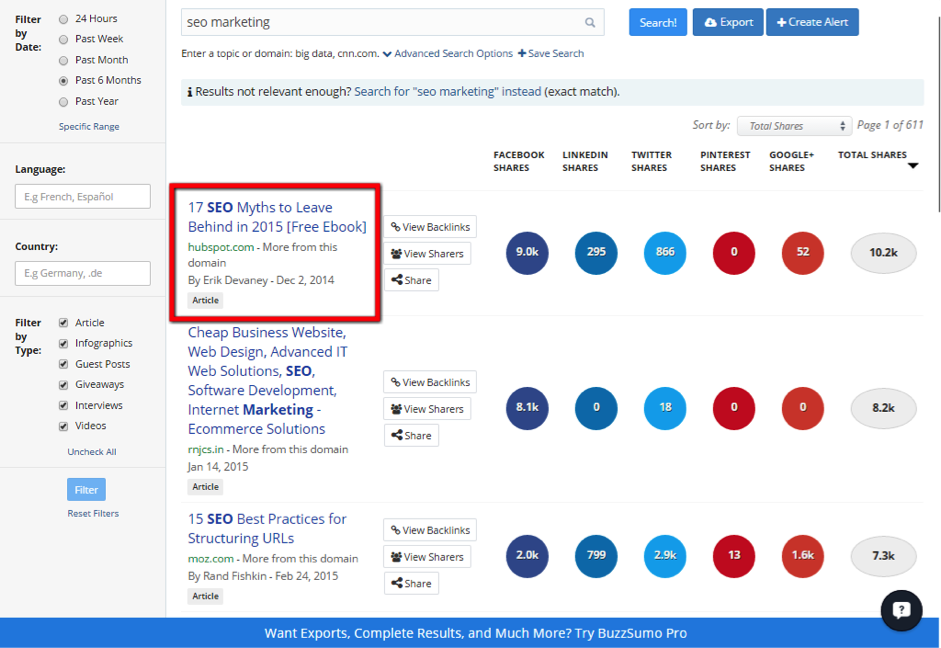
For instance, my favorite blog topic is “SEO marketing” and here it how to use Buzzsumo to find content that gets more shares and links.
seo
Instantly after entering your keyword you’re not only provided with lots of articles, but it also shows you the total number of shares including Facebook, LinkedIn, Twitter, Pinterest, and Google+.
In the above scenario, we’re came up with excellent post ideas like “17 SEO Myths”, “15 SEO Best Practices” etc. All of these are great blog post ideas and you can definitely improve them by providing more data, creating Infographics, or doing expert roundups, etc.
On the left side, it also has some filters to help you find what type of content form you want (including articles, Infographics, videos etc).
Buzzsumo is not only free (although it has premium version) but it is amazing way to find high quality content in your industry.

Step 2: Make it even better (create timeless content around it)

Once you have a list of great content ideas that are proven to bring you results, you now need to make it even better.
One of the simplest ways to get more backlinks, shares and comments on your blog posts is to making your content a “one-stop source”. How can you do that?
If you’re posting textual format of contents on your blog, write detailed posts.
In one of his blog posts, Neil Patel discovered an “average content length for a web page that ranks in the top 10 results for any keyword on Google has at least 2,000 words.”
seo1
Similarly, if you’re creating videos or Infographics, make them better by creating an appealing design. In summary, add something extra to the high performing content in your niche and make it epic.

Step 3: Outreach to the right people to get more buzz

Once you have epic content on your blog, it’s now time to reaching out to the right people in your niche.
How can you find out the people who are interested in promoting your content?
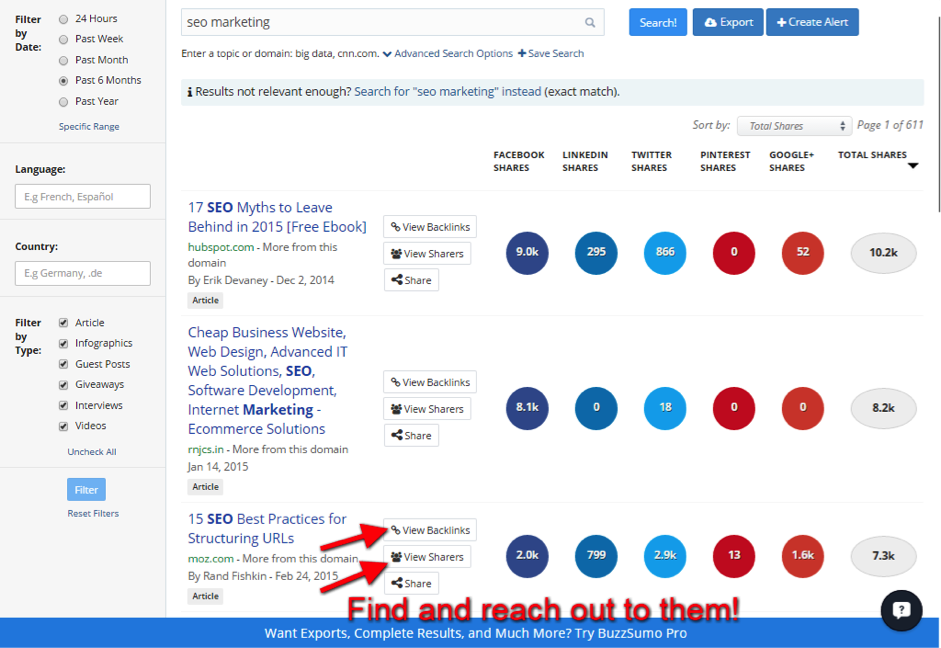
You can again use Buzzsumo. Here’s how. When you enter a keyword on Buzzsumo, it shows you who linked to the top content including the social sharers.
seo2
Now, reach out to them. Connect them on twitter, find out their emails and start creating more buzz. You can also use tools like Majestic SEO, Open Site Explorer, ahrefs etc to find all of the links pointing to your competitor’s content. And when you reach out to them after creating a link worthy post, you’ll have more chances of getting links to your sites too by asking them without being pushy.

#2. Using content upgrades to boost your email list

Whether you agree it or not, email list is golden. Having a list of hungry email subscribers is an asset for every blogger.
Having an email list will not only increase your blog traffic but it will also boost your sales and trust with the readers. Email list is the second biggest traffic source for Neil Patel’s QuickSprout blog. And for most bloggers the same is true – email list is their top traffic source!
So why not invest your time wisely on building an email list instead of focusing on SEO? Instead of trying all the list building strategies under the sun, it’s better to go for one crazy idea that increases your list. Content upgrade is one such list building strategy that helps your boost your subscribers quickly.

What is a content upgrade?

A content upgrade is an extra bonus that is extremely relevant to your post topic.
For instance, if you’ve a popular blog post titled “10 ways to supercharge your SEO”, you could create something like “on-page SEO checklist” to use as a content upgrade to boost your email list.
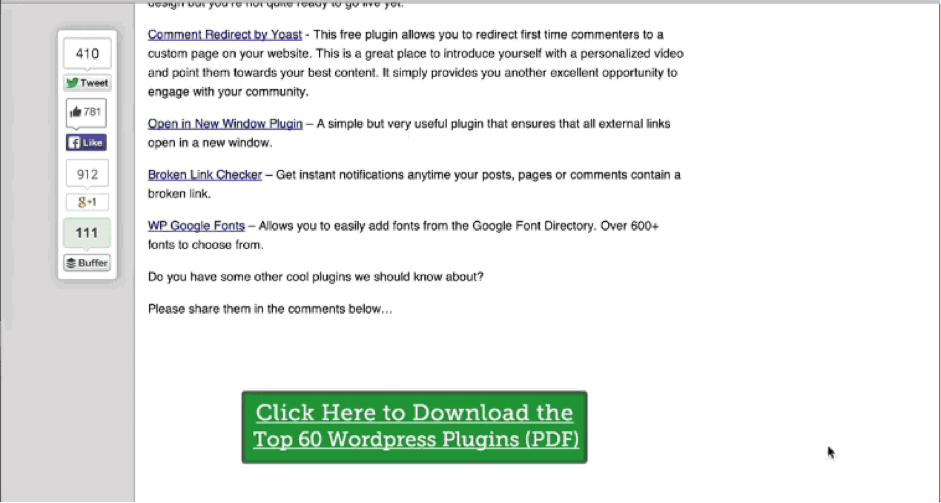
A content upgrade looks something like this:
seo3

How using content upgrades can triple your email list?

Content upgrades are usually given away for free to the blog visitors in exchange of their emails.
Content upgrades are extremely specific. Hence, they convert really well. If you want to convert normal website visitors into subscribers, start using content upgrades.
Do they work? Yes, they do.
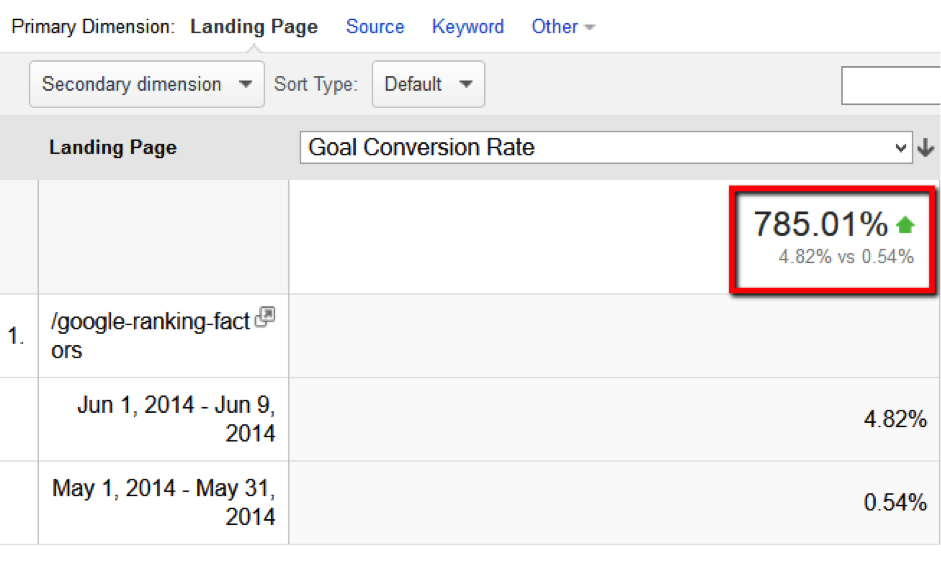
Brian Dean gives away a post-specific resource on one of his most popular posts.
Did you know that he got a whopping 785% increase in conversions (compared to the previous month).
seo4
That’s A LOT, right? That’s the reason why you need to start focusing on creating content upgrades for your top performing posts or pages.
So how to create content upgrades to increase your overall email list and traffic?
First off, find out five top-performing posts on your blog.
Create a list of posts that got more comments and shares. Also use Google Analytics to find out the top pages that are sending you more traffic from search engines.
Once you’ve the list of popular contents on your blog, you now need to create content upgrades. You can create a bonus, checklist, video or anything that adds more value to the current post.
And you can use tools like LeadPages, SumoMe etc to create content upgrades on your blog posts or pages to grab more email subscribers.

#3. Create an “after post” checklist to get more visibility

Did you know that you’ll get better results when you spend most of your time on promoting your content rather than creating it? Blog post promotion is to get more visibility on your blog posts.
If you’ve creating a great blog post, instead of sitting back and waiting for someone to find your content – it’s way better to create a content promoting routine.
After you publish a blog post, make sure to do the following:
Promoting on social media: Social media is the new SEO. If you want to boost your overall website traffic, be active on social media sites like Facebook, Pinterest, Twitter, Google+ etc. Almost every blogger on earth use these social media networks, so you’ll get more exposure for your blog posts if they have attention grabbing headlines.
Posting to forums: Find out the relevant forums in your niche and connect with the other bloggers. Share and comment on their links, and whenever you have posted something on your blog, make sure to submit your links. And ask for a feedback from other bloggers. This is the surefire way to get more visibility on your posts.
Submit to social bookmarking sites: Digg, StumbleUpon, Delicious – all are social bookmarking sites that have huge readers. If your post does well on these sites, take it for granted that your overall search traffic will also increase overtime.
Leave comments on other blogs: Want to get more comments on your blog posts? Then, start leaving thoughtful comments on other blogs that are similar to your blog’s topic. Use their names while leaving comments and ask intelligent questions to spread your name across the blogosphere.
Here’s a great blog post checklist written by Pat Flynn, although it was written a couple of years ago – but it’s still worth following.
Spend 2/3 time on promoting “others” stuff and spend the remaining 1/3rd time on promoting your stuff. Why?
Everyone wants more shares, likes, tweets and comments. But most people don’t spend much time on promoting others. What happens if you spend most of your time on promoting others stuff instead of yours? Bang!!
You’ll get more attention from the bloggers. You’re also helping the community by promoting quality stuff on your networks like Facebook and twitter. Eventually, you’ll get more visibility, followers and shares on your own posts too.

So where do you go next?

Then see the results and watch your website traffic grow. Increasing traffic to a blog or website is not a rocket science. By following what works, you can dramatically boost traffic to your blog posts.
Check out the growth hack techniques mentioned above, pick anyone of them and start implementing.
The best part about using growth hacking to your content marketing strategy is this: you’ll get results really fast. They don’t take months to see the results. You’ll see the rewards within days or weeks.
So what are you waiting for? Go ahead and apply growth hacking techniques to improve your blog traffic.
Do you have any more strategies that will increase website traffic without doing any SEO? Let me know if you’ve any more insightful growth hacking tips in the comments.

9 Habits of Bloggers Who Have Huge Audiences

 9 Habits of Bloggers Who Have Huge Audiences


Let’s look at why highly successful bloggers truly connect with their audience:

1. They are Passionate About Their Subject

When you’re truly excited, it comes across in your writing – it arouses your audience and makes them feel that you have something worth saying. Don’t pick a blog niche just because there are lots of potential readers, write about something you truly care about, and readers will come flocking. In any case, if you’re not deeply passionate about your subject, chances are you’ll get bored and abandon your blog very quickly.

2. They Take the Time to Make Themselves Experts

People read blogs because they want unique insights and interesting points of view. If you just repeat what other bloggers are saying, then you’re not adding any value.
You need to take the time to become a true expert. If you’re passionate about your subject, this should be a labor of love – not a burden. Read widely and keep up with the latest news so that you have your finger on the pulse of your subject.
Engage in social media – not just your own blog – to build your knowledge and have meaningful discussions. By making learning a lifelong process, you’ll give your readers something that they just can’t get anywhere else.

3. They Create Incredibly Useful Content

Not only are top bloggers experts, they also give their readers genuinely helpful information.
Don’t just focus on expressing your own views – think about what your audience wants to know, and then give them this information.
For example, if you blog about cooking, ask kitchen equipment manufacturers for product samples. Then try these samples out, and tell your readers what you think. On the other hand, if you’re a fashion blogger, make the effort to go to real fashion shows and give your followers a first-hand account of what went on.

4. They’re Prolific

To grow a huge audience for your blog, you need to keep your readers coming back. Sure, it’s important to add new readers all the time, but if your existing audience is drifting away, then you’re fighting an uphill battle.
The way to build a loyal following is to produce lots of fresh content – every day if possible. This doesn’t mean you should write for the sake of writing – fuzz and fluff are useless. You have to deliver concise, insightful material on a regular basis – it’s tough to do this, but the more you try, the easier it gets.

5. They’re Motivated Self-Starters

The great thing about blogging is that you don’t have a boss telling you what to do – it’s also one of the biggest challenges.
No one is going to force you to sit down and write that next blog post, or tell you to go out and interview industry experts. What you do has to come from within yourself. Unless you can get up each morning and tear into life with a fresh appetite, you’re going to struggle. That’s why it’s so important to be passionate about your subject – if you believe in what you’re doing, then staying motivated is much easier.

6. They Know How to Manage Their Time

As a blogger, it’s so easy to waste time. There are countless ways to pretend to yourself that you’re getting useful work done. For instance, you may find it fun to play around with the latest plug-ins for your blog – but you need to ask yourself whether this is the best use of your time.
Successful bloggers look at their time as a precious resource – they plan ahead, schedule activities, and then do what they say they’re going to do. Everything in their plan is there for a reason. If something isn’t in the plan, it isn’t a priority.

7. They Persist

Even the most successful bloggers have setbacks. Not all of your blog posts will hit the mark, and you’re going to get turned down again and again by people you want to interview.
It’s easy to get discouraged, but to succeed you need to carry on. Talent isn’t enough – there are lots of skilled bloggers who don’t succeed because they can’t keep going when the going gets tough. The best bloggers are determined and won’t take no for an answer – if something doesn’t work, they just move on to their next great idea.

8. They Engage in Meaningful Dialogs With Their Readers

A blog isn’t a lecture. The best bloggers listen to their readers and create a dynamic community.
By responding positively to what their readers say, answering their questions, and engaging in meaningful conversations, they make their readers feel like they belong. This in turn creates a deep bond and a sense of trust – turning readers into impassioned supporters.

9. They Build Strong Relationships With Other Bloggers

Blogging isn’t a competition.
Great bloggers take the time to build relationships with other bloggers. They leave thoughtful comments, share other bloggers’ posts and even get in contact with them directly. If you do this, you’ll get amazing insights that you can share with your own blog readers. Equally important, connecting with other bloggers gives you exposure and helps you to build your audience. When you build a relationship with other successful bloggers, they’ll be the first to talk about what you do. Just make sure that you’re completely genuine. You have to truly care about what other bloggers are saying – otherwise you’ll just come across as engaging in cynical promotion, and they’ll spot you a mile away.
Jeff Foster is co-founder and CEO at Tomoson, the influencer marketplace. The platform allows bloggers and social media influencers to get paid for posting sponsored content, and lets businesses connect with targeted, niche audiences.

9 Tricks I Used To Triple My AdSense Earnings In 30 Days

I have been using Google AdSense to monetize my blogs and websites for as long as I remember. In fact it was the first method I ever tried (I made a whooping $15 on my first month… back in 2005). Over the years I migrated to other methods (e.g., direct sponsors and affiliate marketing), which made AdSense become merely an inventory filler. I was still making around $1,000 monthly from it, but whenever I could I would use other methods over it.
Then some months ago I started noticing an upward trend on the CPC of my sites, and I figured that I should give AdSense another try. I started applying some tricks here and there, and the next month I made over $3,000 with it (that is combining all my sites). I was pleasantly surprised, and I decided to keep using it actively on some sites.
In this article I want to share with you the tips and tricks I used to triple my AdSense earnings in one month.

1. I added units to my Big Websites

Daily Blog Tips and Daily Writing Tips are my largest websites in terms of traffic. They are getting close to one million monthly page views (combined). Despite that I was not using AdSense on them, mainly because the direct sponsorship model was working relatively well.
Some months ago I decided to load some AdSense units on the sites, however, and the results were very positive. Around 70% of the boost I generated to my earnings came from these two sites. At the same time I managed to keep the other monetization methods working fine, and no reader ever complained about the new ads (more on that later).
Even if your blog is already making money with direct sponsors and affiliate marketing, therefore, you could still manage to increment your earnings by strategically adding some AdSense units.

2. I added units to my Small Websites

As many webmasters do, I have a bunch of small websites scattered around the web. Some are on free hosted platforms like Blogger, and others are self hosted sites that I abandoned along the way. Most of these sites still get traffic, however. Not much, but combined the numbers get decent.
I figured that adding AdSense units to all these sites could yield some money, and I was right. The main reason is that, since these are abandoned sites and don’t have loyal visitors, I can place the units very aggressively. The result was a very high CTR (Click-through rate), which compensates the small traffic levels.
Don’t underestimate the earning potential of small websites, especially if you are willing to place AdSense units aggressively.

3. I used the Large Units

If you want to make money with AdSense you’ll inevitably need to use one of these units: the 336×280 large rectangle, the 300×250 rectangle, the 120×600 large skyscraper or the 728×90 leaderboard.
Whenever I tried to use smaller units the results were disappointing. Even if I positioned them aggressively the CTR was just too low.
All four units mentioned above can produce good results, but the best performing one is by far the 336×280 large rectangle, and that is the one I used to boost my earnings.

4. I placed the Units above the Fold

My first trial was to place the 336×280 large rectangle between the post and the comments section of my blogs. The results were OK. I then decided to try placing them below the post titles for one week, and the CTR skyrocketed. In fact I still need to find a placement/unit combination that will beat placing a 336×280 unit below post titles.
I knew this rule, but I guess I needed to test and get confirmation. The rule is: if you want to make money with Google AdSense, you must place your units above the fold.

5. I Focused on Organic Traffic

My main concern with adding a large AdSense unit right below my post titles was that some of the loyal readers could get annoyed with it. At the same time I knew that loyal readers become ad blind quite fast, and that the bulk of my money would come from organic visitors (i.e., people coming via search engines to my posts).
To solve this problem I decided to display the large rectangle only on posts older than seven days (using the Why Do Work WordPress plugin). It worked like a charm, as loyal readers don’t even notice the ad units when they are browsing through my recent posts, and organic visitors almost always see the ads because they usually land on posts older than seven days.

6. I started using AdSense for Search

I was not sure how much money I would be able to make with AdSense for Search, but I was not happy with the search results provided by WordPress, so I decided to give it a shot anyway.
Currently I am making around $60 monthly with AdSense for Search. It is not much, but if you sum it over one year we are talking about $720. On top of that the search results are as relevant as you’ll get, so it is a win win situation.

7. I started using AdSense for Feeds

Another AdSense product I decided to try was the AdSense for Feeds one. I opted to display the ads below my feed items (you can also place them on top, but this would be too intrusive in my opinion). The results here were pretty good, both in terms of CTR and earnings.
You obviously need a large RSS subscriber base to make this work, but I am guessing that even with a couple thousand subscribers you could already make $100 monthly from feed ads.

8. I played around with section targeting

Section targeting is an AdSense feature that allows you to suggest specific sections of your site that should be used when matching ads. You can read more about it here.
I found that on niche and small websites section targeting can help a lot. Often times Google was displaying unrelated ads on these sites because there weren’t enough pages. After using section targeting I managed to increase the relevancy of the ads and consequently the CTRs.

9. I tested with Different Colors and Fonts

If you enabled both image and text ads on your units you should be able to customize the colors and fonts. I did some testing with both of these factors, and it helped to increase the numbers. Nothing dramatic, but it was definitely worth my time.
You just need to track your CTR for a couple of weeks. Then change the color or font and track it for another week, seeing if you can beat the original CTR. If you can, keep the new format. If you the performance decreased, try a new color or font and track the CTR for another week, until you find the optimal combination.
On my sites the best results came from making the ad units merge with the look of the site, but on some sites contrasting colors perform better, so testing is a must.